


Released On 15th Dec 2025
Topping Up Your Oil: Why “Any Old Oil” Won’t Do
Modern cars are so good at looking after themselves that many drivers go years without ever lifting the bonnet, let alone topping up the oil. That’s why it can be a real surprise when a car like my Audi A5 suddenly flashes up a message saying “add no more than 1 litre of oil”. It feels unusual because regular servicing means most drivers simply don’t have to think about oil very often anymore.
Yet when that warning appears, you are suddenly faced with a whole shelf of different oils – 0W‑20, 5W‑30, 5W‑40, C3, ACEA this, API that – and it can feel almost impossible to know which one is right for your specific engine. Different manufacturers design their engines around specific oil specifications, and oil brands then label their products in slightly different ways, which only adds to the confusion.
Why the Right Oil Matters
Engine oil is not just “slippery stuff” – it is carefully blended with additives and a specific viscosity to match the needs of modern engines, turbochargers, emissions systems and long service intervals. Putting in the wrong oil can mean:
- Increased engine wear or noisy operation
- Problems with emissions systems such as DPFs and catalytic converters
- Poor fuel economy and potential long‑term damage
For that reason, guessing and thinking “anything is better than nothing” really does not hold true with today’s engines. The safest options are always to follow the vehicle handbook or use a reputable oil‑matching tool.
Why It’s So Confusing at the Petrol Station
In service stations the choice can be overwhelming: several brands, multiple viscosities, and different approval codes on the labels. One brand may emphasise viscosity (for example 5W‑30) while another highlights manufacturer approvals, but both still have to meet specific industry standards such as ACEA or API. Unless you are very familiar with these codes, it is easy to reach for something that “looks close enough” but is not actually correct for your engine.
On a visit to the local filling station, it’s common to see people in the oil aisle looking genuinely unsure what to buy, sometimes just grabbing the closest bottle and hoping for the best. That might have worked on older, simpler engines, but with modern vehicles it is much safer to check before you pour.
Using Shell Lubematch to Check
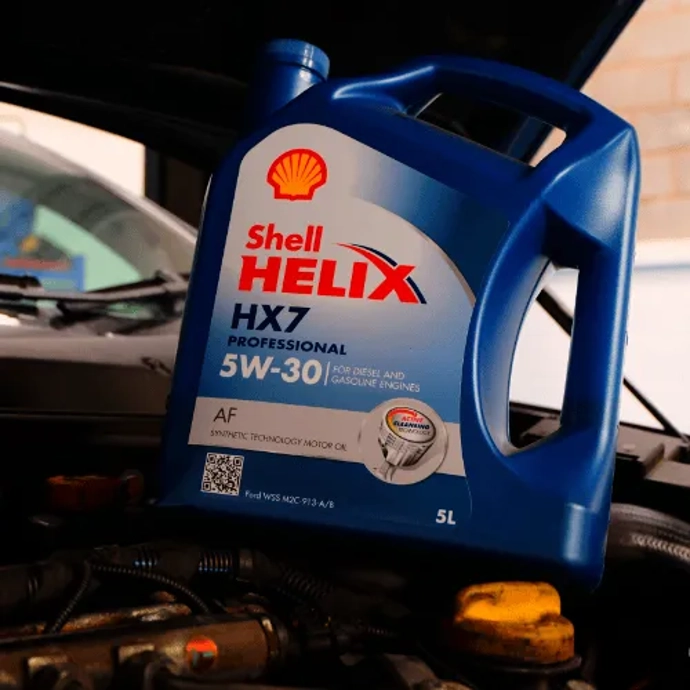
One of the quickest ways to take the guesswork out of it is the Shell Lubematch tool, which Okee uses regularly. Shell’s online tool lets you enter your vehicle details or registration and then recommends specific Shell oils that meet the requirements for your car’s engine and, where relevant, its gearbox and other lubricants.
If you find yourself needing to buy a litre of oil at a petrol station, it is well worth taking a moment on your phone to visit Shell’s “Find the right oil for your vehicle” page and run your car details through Lubematch. That way you can be confident the bottle you are picking up actually matches the specifications your engine was designed for, rather than relying on guesswork.
Avoiding Overfilling When You Top Up
Once you have the correct oil, the next important step is not to overfill. Too little oil is dangerous, but too much can also cause serious issues, including oil foaming, crankcase pressure problems and damage to seals and other components.
A few simple tips to help keep things safe:
- Park on level ground and check the dipstick first, with the engine off and cool, so you know roughly how low it is.
- Add small amounts at a time – for many cars, the distance between the minimum and maximum marks on the dipstick represents about one litre, so a top‑up may only need a fraction of a bottle.
- Re‑check the level after each small pour, aiming to sit between the minimum and maximum marks rather than right on the top line.
If your dashboard warns you not to add more than a certain amount (for example “no more than 1 litre”), follow that instruction carefully. If you are unsure how much to add, or you think you may have overfilled, it is safer to let a garage check it for you rather than risking damage.
When to Ask a Garage Instead
If the oil warning light comes on repeatedly, if you are unsure what specification your car needs, or if you are not comfortable checking levels yourself, a professional check is a sensible next step. Regular servicing with the correct, manufacturer‑approved oil keeps modern engines happy and reduces the chances of you ever needing to top up between visits.
At Okee, the team can both supply and fit the correct oil for your specific vehicle, and help you understand what your dashboard messages really mean. So if in doubt, use a trusted tool like Shell Lubematch to identify the right oil – and if you are still not certain, ask your local professional garage to double‑check it and set the level correctly for you.